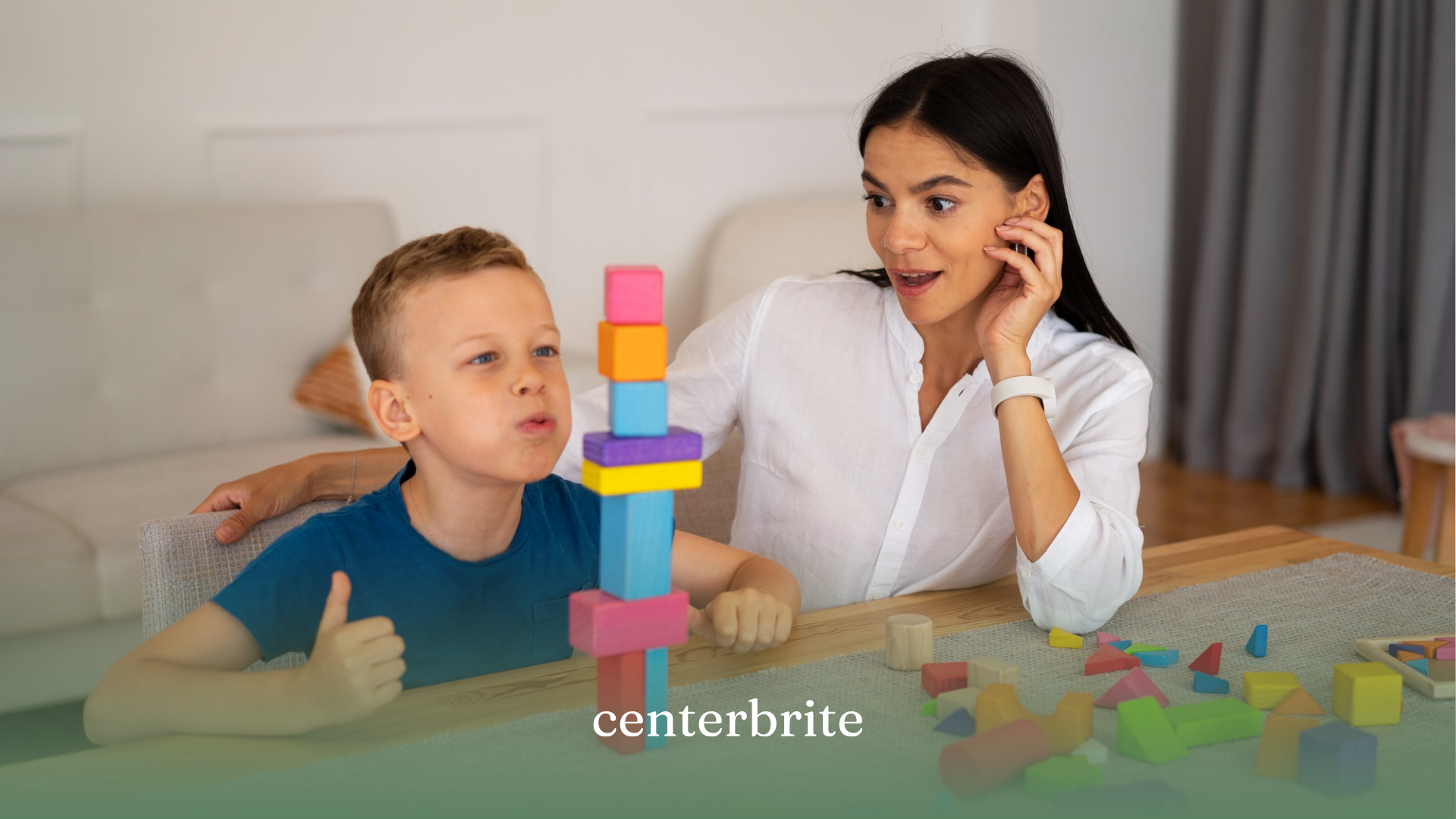
A mother I spoke with described a Thursday afternoon that a lot of families will recognize. Her son had just finished a session, and she'd watched him hand his therapist a picture card to ask for a snack, four separate times, with no prompting at all. She felt something loosen in her chest.
Then it was Saturday. Same boy, same kitchen, same cards on the same shelf. Her husband asked what he wanted. Nothing. Crying at the cabinet, exactly like before.
She told me she spent the rest of the weekend wondering whether the therapy was working at all, or whether her son just performed for his therapist. Neither is what was happening. What was happening has a name, and it is one of the most important concepts in the whole field.
Quick Answer: What Is Generalization in ABA?
Generalization means a skill shows up outside the exact situation it was taught in: with different people, in different places, with different materials, and after time has passed. It's the difference between a child who can request a snack from one therapist with one set of cards and a child who can ask anyone, anywhere, in whatever way works. Generalization is not something that just happens once a skill is learned. It has to be planned into the program deliberately, taught, and measured.
In this post:
- Why a skill can look solid in session and disappear at home, without anyone doing anything wrong.
- The four kinds of generalization a program should be tracking, with everyday examples.
- What a therapist actually does differently to make skills travel.
- What this looks like when it works, and what the setbacks look like too.
- Small changes parents can make at home that have a large effect.
- The questions to ask your BCBA if a skill isn't crossing over yet.
Why the Skill Stayed in the Session
Here is the thing that helped the mother above more than anything else I could have told her: her son wasn't being selective, and he wasn't faking.
Young children learn the whole situation, not just the target. When a skill is practiced with one adult, in one spot, with one set of materials, the child's brain reasonably treats all of that as part of the deal. The therapist's voice, the way she phrased the question, where she sat, the particular cards, the specific snack. Change several of those at once, and the situation no longer matches what was learned.
This isn't a new observation. In 1977, Trevor Stokes and Donald Baer published a review in the Journal of Applied Behavior Analysis that shifted how the field thought about this. Their argument, in plain terms: generalization had been treated as something you hope for after teaching ends, and it should instead be treated as something you actively program for from the start. Their phrase for the old approach was "train and hope." Almost fifty years later, that framing is still the standard, and it's a reasonable test to apply to your own child's program.
It also helps to know that professional standards treat this as a requirement rather than a nice extra. The BACB Ethics Code for Behavior Analysts states in Standard 2.14 that behavior analysts design and implement interventions to produce outcomes that are likely to maintain under naturalistic conditions. A skill that only works in a session is not the outcome the standard is describing.
The Four Kinds of Generalization
When a BCBA says a skill "hasn't generalized yet," it's worth asking which kind they mean, because the fix differs.
TypeWhat it meansWhat it looks like at homeWhat a program does about itAcross peopleThe skill works with anyone, not just the therapistAsks a parent, a grandparent, or a babysitter for help, not only the RBTRotates who practices with the child, and coaches family members directlyAcross settingsThe skill travels to new placesUses the same request at Grandma's, at the park, in the carRuns sessions in different rooms and out in the communityAcross materials and wordingThe skill isn't tied to one object or one phraseResponds to "want a snack?" and "are you hungry?" and to a different cup than the usual oneTeaches with varied examples and varied phrasing from the startOver time (maintenance)The skill holds up weeks and months laterStill washing hands independently in March, taught in OctoberSchedules maintenance checks and thins prompts and reinforcement gradually
A fifth idea sits alongside these: response generalization, where a child finds new ways to accomplish the same thing. A child who learned to point at a cup, then starts saying "cup," then later says "I'm thirsty," is showing exactly that.
What Therapists Actually Do Differently
Programming for generalization changes how a session is run, not just what's recorded at the end of it.
Teaching with many examples rather than one.
If a child is learning to request juice, the program uses different cups, different juices, different rooms, and different people. Teaching a concept with one exemplar tends to produce a skill tied to that exemplar.
Practicing where the skill is needed.
Coats get practiced at the front door. Requests get practiced at the actual snack cabinet before actual snack time. That's the reasoning behind running sessions in a child's own home and community rather than only in a clinic room. This is a core feature of naturalistic approaches; Autism CRC's overview of naturalistic developmental behavioural interventions describes skills being taught with a focus on integration and generalisation across contexts and as part of daily routines with a variety of communication partners.
Letting natural consequences do the reinforcing.
When asking produces the actual juice, the skill has a reason to continue outside therapy. When asking produces a token that only exists in session, it doesn't.
Loosening the structure on purpose.
Once a skill is solid, the therapist starts varying their wording, their position in the room, the pace, and the level of background noise, so the skill isn't cued by a rigid set of conditions.
Fading prompts and fading themselves.
A therapist who stays one foot away forever has built a skill that requires a therapist one foot away. Distance, then presence, gets reduced deliberately.
Teaching you, not just your child.
Parent coaching is where most generalization actually happens, because you are with your child for the other hundred hours of the week. It's why parent training is built into good programs from day one rather than offered as an add-on.
Checking with probes.
A generalization probe is a quick, unprompted test of whether the skill shows up in a new situation. If probes aren't being run, nobody knows whether the skill has traveled, and the ethics code's requirements around collecting data and continually evaluating whether outcomes are being achieved (Standards 2.17 and 2.18) are hard to meet.
What This Looks Like in Practice
The example below is a composite of several children we've worked with. Details have been changed, and it doesn't describe any single child.
A three-year-old learned to use a single sign for "more" during therapy sessions, and used it reliably within about three weeks. At home with her parents, nothing. Her BCBA didn't treat this as a failure of the child. She treated it as a gap in the plan.
The next month looked different. The therapist ran part of each session with mom in the room doing the activity, then with mom leading it and the therapist coaching quietly. They moved practice out of the playroom and into the kitchen and the backyard. They used three different snacks and two different games, and they varied the words the adults used. The family kept a short list on the fridge of moments in the day where a "more" opportunity naturally existed: bubbles, swings, crackers, tickles.
In our sessions, we've seen that parents often underestimate how much the specific words they use matter. One father was saying "do you want another one?" while therapy had been using "more?" The child wasn't refusing. She was waiting for a cue that wasn't coming. Aligning that took one conversation.
By the end of the month, the sign was showing up with both parents and with a grandmother who visits on weekends. It took longer at daycare, which is common, because the staff there hadn't been coached and the setting shares almost nothing with home. That's usually the last domino to fall, and it falls faster when someone shares the strategies with the school or daycare directly.
What You Can Do at Home
None of this requires training. It requires variety.
- Take a turn. Ask your child's therapist to teach you one target and then practice it while they watch and coach.
- Change one thing at a time. Same skill, different room. Then same skill, different person. Changing everything at once tends to produce failure and frustration.
- Use different words for the same thing. "All done," "finished," "you're done." Real life will.
- Accept the approximation. If the goal is a word and you get a sound, respond to the sound. Shutting down an attempt because it wasn't the full version teaches your child that trying with you doesn't work.
- Catch the natural moments. Bath time, the car, the walk to the mailbox. Five small opportunities a day beats one long practice session.
- Tell your BCBA exactly where it breaks down. "He does it with me but not his dad" and "she does it at home but not at my mother's house" are different problems with different solutions.
If a Skill Isn't Crossing Over
Ask your child's BCBA:
- Which of my child's current goals have generalization built into them, and how?
- How are you testing whether this skill works with new people and in new places?
- What can we practice at home this week, and how exactly should we say it?
- Who else needs to be trained on this, and can you coordinate with the school or daycare?
- How will we know the skill is holding up three months from now?
A good clinical team will welcome these. Generalization is their job, not an extra you're asking for.
From the Session to the Rest of Your Life
A skill that only exists inside a therapy session isn't finished yet. The whole point of the work is a child who can ask, refuse, wait, cope, and connect with the people in their actual life, in their actual kitchen, on an ordinary Saturday.
At Centerbrite, our BCBAs build generalization into goals from the start, deliver therapy in your home and community where those skills are needed, and coach parents directly so the progress doesn't stay with the therapist. We provide in-home ABA therapy for autistic children across Bergen, Essex, and Morris counties in New Jersey. If your child has skills that aren't crossing over yet, contact us today to get started.
Frequently Asked Questions
1. Why does my child use a skill with the therapist but not with me?
Most often because the skill was learned with that person, in that place, with those materials, and it hasn't yet been taught across other conditions. It usually isn't about the relationship or about your child choosing not to. The plan needs to widen.
2. How long does generalization take?
It varies by child and skill. Some skills transfer within days once practice broadens, while others take months, especially in settings where nobody has been coached. Progress should be visible in the data even when it's slow.
3. Can we work on generalization at the same time as teaching a new skill?
Yes, and modern programs generally do. Using varied materials, people, and phrasing from the beginning tends to work better than teaching a skill narrowly first and trying to broaden it later.
4. Does this apply to reducing behaviors too, not just teaching skills?
It does. If a child learns to ask for a break instead of screaming, that replacement needs to work in every setting where the old behavior occurred, including school and the community, or it will only hold in one place.
5. What if my child's daycare or school won't use the same strategies?
Ask your BCBA about direct coordination, even a summary sheet or a call. Consistency helps, but you don't need perfect consistency everywhere; you need enough varied practice that the skill isn't tied to a single set of conditions.
Sources:
- https://bacb.com/wp-content/ethics-code-for-behavior-analysts/
- https://www.autismcrc.com.au/interventions-evidence/category-overview/NDBI
- https://www.motivity.net/blog/generalization-in-aba